In this article from 1995, Adrienne Redd explores the connection (or influence) Indian music has had on jazz. Interesting read.
EastJazz
Intricate connections, cultural contradictions and coming home: the influence of Indian music in world music genres
"For the better and finer enjoyment of Indian music, Western audiences should forget about harmony and counterpoint or the mixed tone colors... and relax rather in the rich melody and rhythm, and with the exquisitely subtle inflections through which the atmosphere of a Raga is built up." - Ravi Shankar, 1956
Indian-influenced music seemed to explode into western culture when George Harrison of the Beatles studied with Ravi Shankar in the 1960s, but avant-garde musicians and jazz performers had discovered the joy and versatility of classical Indian music long before. World and American music continue to draw heavily from Indian music because it offers potential found nowhere else. Jazz brims with connections and is about picking up themes and improvising on them. Similarly, the few Americans and Indians living in America and playing Indian-influenced fusions are interconnected. Members of this small circle know one another's names and influence one another's work. Warren Senders is one such musician.
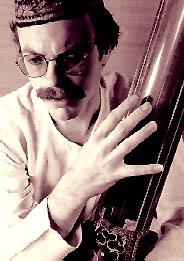 With his extravagant handlebar mustache, square embroidered cap, collarless shirt and serious, far away eyes Senders looks like a late-19th century Brit caught in the magnetic field of Asian subcontinent culture. Senders splits his physical life between Cambridge, Massachusetts and Pune, India. And he has given over his soul to Khayal, the vocal style of north Indian classical music, while contributing a bluesy bassline to the ragas he performs with six Indian partners playing violin, bansuri, flute, sitar, guitar, tabla and drums. (A raga is a melodic sequence with a minimum of five notes patterned in a fixed ascending and descending order - the aroha and avaroha.)
Every artist yearns to experience a genre for the first time and to have that intoxicating wave of recognition, of coming home. Senders has a solid background in western music performance, theory and history, having studied four years with a tutor in Cambridge and two at the New England Conservatory of Music in Boston, but his first reaction to Hindustani music was one of inspiration and passion. "I said, 'God - this is what I've been hearing in my head.'"
He elaborates, "The first piece that really turned me on was a piece of light music for an all-Indian ensemble composed by Ravi Shankar; it featured a vocal interlude performed by Laxmi Shankar. Subsequent to that, the music that excited me beyond all measure was an LP of Bhimsen Joshi performing Raag Marwa." Bhimsen Joshi is arguably the most significant living performer of Hindustani vocal music.
Seeming to allude to Hindu beliefs, Senders says that the first American incarnation of his band, Antigravity, took place from 1979 until 1983. Antigravity included saxophone (Phil Scarff), trombone, guitar, bass (Senders) and two drummers. Senders says, "It was a hot band!" He explained that it then dissolved and reformed, but that the American version of Antigravity is "on the back burner, but I do hope sometime in the next few years to put out a record with that ensemble as well." The current avatar of the band has released a new recording, Boogie for Hanuman (released Fall of 97 on Accurate Records). The CD consists of seven ragas composed by Senders and based on Hindustani religious text. Warren Sender's wife, Vijaya Sundaram, who performed on the first Antigravity CD and on all the cassettes, will also be on the forthcoming CD. She is a sitarist, singer-songwriter and composer who has released several cassettes of her own.
Connections between jazz and Indian music
There has long been a connection between jazz and Indian music. This cross-cultural pollination has lead to recordings, such as Boogie for Hanuman. John McLaughlin, for example, came to prominence as a guitarist with Miles Davis's ensemble, then led an early, and successful, jazz-rock fusion outfit called the Mahavishnu Orchestra. He was at the time a devotee of the Indian mystic Sri Chinmoy, which furthered his interest in things Indian. Chick Corea, Stanley Clark, Al DiMeola and Lenny White formed "Return to Forever", which was another highly acclaimed Hindustani-influenced jazz fusion effort.
Northern Indian music, which sustains notes, while southern Indian does not, seems to be more suited to melding with Afro-Caribbean, Brazilian, North American jazz and other influences. Karnatic or southern Indian music is more a part of everyday life in India, while Hindustani or northern Indian music is of the court and of the intelligentsia, perhaps making it more open to variations and experimentation. Another reason that Hindustani music may adapt to and blend with other influences is that Persian influences were grafted onto the rootstock of Hindustani music during the Mughal empire (1526-1857) when Islamic law was not tolerant of praising other than Allah, so the creative energy of the music had to be malleable.
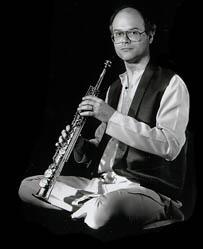
Phil Scarff became interested in playing Hindustani classical music through his work with vocalist, bassist, and composer Senders, playing in Antigravity beginning in 1980. Scarff says, "At that point, Warren [Senders] had been studying Hindustani Sangeet for several years, and he incorporated Indian influences in his compositions, as well as in his instructions for improvisation. As a jazz musician, I was interested in new techniques and ideas for improvising, and the Indian concepts were very intriguing to me. After several years of listening to recordings and attending concerts, I began my formal study of Indian classical music in 1985, first in Boston, and then traveling to Pune, India." Since then, Scarff has made eight more trips to India to continue his music studies. He has performed Indian classical music, both in the context of his Indo-Afro-jazz ensemble Natraj, and in smaller, more "traditional" Indian classical settings.
He says, " Having been involved with Indo-jazz fusion for 17 years now, I can respond to how jazz and Indian classical music blend: Both musics are deep and expressive, and are based on improvisation. Both employ improvisation that can derive from an underlying composition. Concepts from both idioms can increase the musical vocabulary of the musician and composer, and can be used as resources for improvisation and composition."
The late Don Cherry, the trumpet player who performed with saxophonist Ornette Coleman's "harmolodic" bands, explained that the symbiosis between Hindustani music and jazz comes from the fact that to a greater extent than having notes, Indian music has tones - 36 of them to an octave, so that there is a greater potential for playing "between the notes" and creating what is called free jazz.
However, unlike American jazz, or other western music, Indian music is built around the rag or melody, which the individual artist clothes and makes new with improvisation and variation each time the melody is performed. On the liner notes of his album, Ravi Shankar Plays Three Classical Ragas in 1956, the artist explained the very minor role of harmony, saying, "Indian music is modal by nature, and though harmony may be present in its simplest form, it is inherent, rather than deliberate. For the better and finer enjoyment of Indian music, Western audiences should forget about harmony and counterpoint or the mixed tone colors which may be considered the prime essentials of a symphonic or similar work, and relax rather in the rich melody and rhythm, and with the exquisitely subtle inflections through which the atmosphere of a Raga is built up."
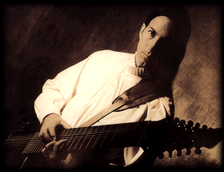 Trey Gunn, Warr guitarist and King Crimson member, talks about these necessary inflections in connection with his sixth solo album, The Third Star. He says, "The influence of Indian music in the west has opened as many doors as it has closed. The new sounds, the sophisticated rhythmic structures and the expansive melodic development all point to new areas for the western musical improviser. However, the 'apparent' static nature of Indian music has often 'given permission' to westerners to do 'nothing' as players, and do it badly at that. (Sadly, I am no exception to this observation.)
"Within the particular atmosphere of a raga, we have a lot to learn. A player can deliver all the elements of a particular raga and get the feel entirely wrong. This has become my latest work as a player/composer: how do define, and deliver, the extremely particular feel of particular piece (even when the musical material is virtually identical to another piece.) The Indian musicians have always been masters of this skill.
"On The Third Star, the first obvious connection to Indian music would be through the sounds, then through the rhythms of the recording -- the droning tones, reminiscent of the tamboura, and soothing slow melodies conjuring the introductory alap of a raga. The percussionist, Bob Muller, plays tabla all over the record and his influence on the material is quite considerable. Most notably there are several tihaisthroughout certain pieces. (A tihai is an Indian rhythmic device, used at the end of phrases.) In addition, many of the pieces are based on asymmetrical rhythms, like seven beats. My hope with these 'odd' rhythms is that they continue to lope along within our western sense of groove without attracting too much attention to themselves. I think, that generally, we have succeeded with this."
Phil Scarff explains what convergence is possible between Indian music and jazz. "Use of tension and resolution is important in creating expression and forward motion in both musics. In Indian music, melodic tension and resolution is created in two primary ways: moving from dissonance to consonance with the drone, and by creating lines that move toward important melodic material central to the raga (chalan).
Rhythmic tension and resolution is created by the use of rhythmic patterns such as tihais, nauhais, and chakradhars, that typically resolve to sam (beat one of the rhythmic cycle). These ideas can also be used in [American] jazz and in Indo-jazz. In jazz, tension and resolution in achieved by harmonic movement; melodic movement, moving from dissonance to consonance against the underlying harmony; and rhythmic activity building into an importance beat in a cycle (this is similar to but less structured than Indian tihais, etc.). Indian classical music and Indo-jazz are very compatible with these melodic and rhythmic ideas; harmonic movement can be applied in Indo-jazz."
Sarod player, George Ruckert says that Indian music blends well with other styles, such as jazz, but stipulates, "The melodic and rhythmic repertoire of Indian music is quite vast. Polyphonic music can give us some of the gifts of the monophonic traditions, but has a hard time with the precision of tuning, emotional content, ornaments, improvised patterns, and lack of harmonic rhythms on Indian music. The "successful" fusions are possible in the light-classical realm, not in the classical, where there is so much to learn before playing it."
Room for originality within a structure is another asset shared by both jazz and (Northern) Indian music. Bhimsen Joshi says, "I listen to (my) old recordings to hear what is lacking so I can improve. When an artist starts at the beginning he always copies his guru, his master. After years and experiences, it is not enough. You must have your own ideas. Remaining true to your gharana's style and to what your guru has taught you, you have to infuse your own personality in your own individual musical style."
Some musicians also note the goofiness and great joyfulness displayed by practitioners of Indian music. This comes from the improvisational paradigm of Indian music (something else it shares with jazz) within which, as Senders says the musicians and particularly the vocalists can, "fail gloriously and succeed even more gloriously." This resonates with Charlie Parker's assertion that "If you want to be a great jazz musician, you have to be ready to be a fool. Senders adds, "The great Indian musicians are great chance takers, but a lot of people are so beholden to tradition that they are afraid to go up on the high board and jump."
Cultural contradictions
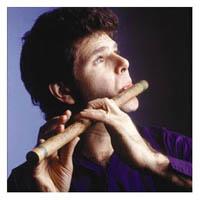 A discussion of the broad and indefinable genre of Indo-jazz is also full of cultural contradictions. For example, although, westerners are sometimes questioned in the role of virtuoso practitioners of Indian music, these same westerners often describe a sense of coming home to the music of a completely alien continent and culture. Like Senders, bamboo flute player, Steve Gorn had the experience of returning to his beginnings with Indian music and says, "When I first heard it. This music felt like home to me. People in India tell me I must have lived there in a previous lifetime and that makes sense to me. I have an affinity for western classic but this is the music I can speak through. Even when I play in jazz ensemble, I am basically drawing on the Indian material, although I am reframing it."
Phil Scarff comments, "I have never felt any resentment. However, there certainly is a credibility issue. In my case, it is probably more severe than for most Western musicians because I play Indian classical music on soprano saxophone, which is not an instrument on which Indian classical music is usually performed. This aside, I have felt a lot of enthusiasm and support from the Indian community, both in the US and in India, regarding my playing of Indian classical music, my playing of Indo-jazz, and Natraj's music."
Ruckert, adds, "Resented" is not the word I would use. But the fact is that most people think of me as an outsider in this music...and will opt to accommodate lesser musicians from India as both teachers and performers. Most people, even from India, haven't the vaguest notion of what this tradition is all about. It is the same with blacks and whites in jazz (or rather, used to be). It will change with Indian music, too, as more people hear and learn. Curiously enough, sometimes when I play in Europe I am "resented" for being an American - they can be very suspicious of Americans telling them about India (they do not like the third party sources who should stick to purveying McDonalds', for which they are naturally gifted). My wife is a Kathak (Indian classical) dancer - blond, blue-eyed, and very good at it. She really feels the stigma that is attached to westerners and Indian arts, since she is so visually anomalous to what people expect."
Centrality of voice in Hindustani music
One contradiction of Indian-influenced music, according to Senders, is that Americans think of Indian music as purely instrumental. In fact, singing, with all of its potential for improvisation, subtlety and personal imprimatur, is central to Indian music.
He says, "The tamber, flute or sitar don't go to the core of the music, which is the human voice. My understanding is that the voice is central and I discovered that if I wanted to learn Indian music, I must first learn to sing. In the west if you tell someone I'm a musician, they ask, 'What instrument do you play?' And they may ask, 'Do you also sing?' In India, if you say, 'I'm a musician, people ask, 'In what style do you sing?' And they may ask, 'Do you also play an instrument?'"
Yet another connection between Hindustani music and jazz may be drawn between Khayal, meaning literally imagination, and scat, improvized nonsense syllables. In Khayal, explains Senders, "There are words that have semantic meaning but are not treated in a meaning-intensive way. Six words may be sung over two minutes of tonal space. The vowels are open and the words are varied. Indians may also improvise on syllables and there are also nonsense songs with meaningless vocal components."
Senders says it is a cultural fluke that Americans perceive Indian music as predominantly instrumental. That may be because of the prominence of the instrumental Indian musican Ravi Shankar, with whom many Americans are familiar. Equally important, however is his brother-in-law, Ali Akbar Kahn. The two were disciples of the same teacher. Khan came to California in 1965, moved the school to Marin County a few years later, and it has operated there ever since. Khan teaches the traditional music to students vocally (all the serious students study vocal music) as well as sarod (his instrument), sitar, violin, flute, guitar, sarangi, and whatever instrument they choose.
Getting below the surface
Classical Indian musicians and performers who blend eastern and western influences study for decades, and seem to resent both dilettante listeners and dabbler musicians. Senders has now been studying Indian classical music for twenty years, and while highly respected, acknowledges that he is a relative youngster and must dedicate himself to further study. Phil Scarff says, "For the typical listener it takes several years of listening to recordings and attending concerts to get below the surface texture of the music. Of course, it depends on the cultural background of the listener. One brought up in India would not need so much time; but one brought up in the West, and generally not exposed to Indian classical music would need significantly more time. I believe that one's exposure to a particular culture and music throughout life, especially early life, plays a major role in one's ability to appreciate a particular type of music.
Ruckert tells his MIT students, "The first four listens through the assigned piece (Western or Eastern, African, or Indian...whatever) are for acquaintance purposes only. Real knowledge of the music comes with the fifth time through and after. Music, especially if it is unfamiliar, takes repeated hearings to become familiar with the idiom, intent, mood, rhythm, length, etc."
Phil Scarff says that the basic trends in appreciation and performance of classical Indian music in the United States are that Indian classical music in the US tends toward shorter concerts and shorter renditions of ragas, compared to performance practice in India. He adds, "There seems to be more audience appreciation of instrumental rather than vocal music in the US. This trend may be working its way into the younger audiences in India, as well. The "flashier" instrumental music seems to have still more appeal in the US."
Senders talks about several landmark albums in Indo-jazz by tabla virtuoso Zakir Hussain, violinist, L. Shankar, ghatam (clay pot) player, Vikku Vinayakraman and Jody Stecher, who studied in India with rudra-veena player Z.M. Dagar. As is the case for Scarff, "flashy" is not, for him, a complimentary adjective. Senders comments that Shakti, the group that Hussain formed, produced "records [that] by and large have weathered well. He adds, "The music was acoustic, well balanced and highly virtuoso. Its downside was that it was if anything too much a virtuoso high-wire act that showcased more the dazzling technique of the participants than any particular innovations of structure or concept. In fact Shakti's music qua music was very similar structurally to traditional Karnatic (South Indian classical). Some of their pieces were in fact adaptations of traditional Karnatic pieces (for which, curiously enough, John McLaughlin and Shankar took composer credit). They are excellent records for the most part, though heavy on flash and dazzle."
In spite of the work it demands, there seems to be a growing appreciation of Indian and particularly Indian-influenced music. Part of the reason for this is the popularity of Indian cinema and its fusion music, which is relatively well regarded by serious musicians. Classical Indian music itself has survived the rise and fall of empires and perhaps its adaptability and openness to new interpretations will allow it live on, in traditional as well as fresh and risk-taking new forms.
Below is a partial discography of Indian-influenced fusion or Indo-jazz mentioned or recorded by musicians quoted here. Allen Lutins has compiled a more complete list to be found atwww.lutins.org/indyjazz.html
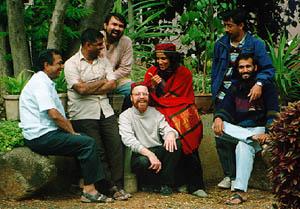 |
| Antigravity, the Pune group |
- Antigravity: The Music of Warren Senders - Accurate AC-4307
- Wings and Shadows: Warren Senders and Steve Gorn - Bamboo Ras BRQ-5339
- Antigravity: Boogie for Hanuman to be released September 1997, Accurate Records
- Making Music by Zakir Hussain (ECM Records) : tabla, percussion,voice / Hariprasad Chaurasia: flutes / John McLaughlin: acoustic guitar / Jan Garbarek : tenor, soprano saxophones. Comments Steve Gorn, "They found some beautiful things there"
- Asian Journal (Music of the World J-101) by Steve Gorn: saxophone, Indian bamboo flute (bansuri)/ Nana Vasconcelos: Brazilian percussionist / Badal Roy: tabla / Mike Richmond: bass. Says Gorn, "It was presented in a jazz context, in that it is improvisatory and the interaction is a jazz interaction."
- Rasa (1982), a collaboration between guitar picker Jody Stecher and sitarist Krishna Bhatt tends to be listed as folk music. It is currently out of print.
- Journey by Ali Akbar Khan (Triloka): sarod /Swapan Chaudhry, tabla/ Jai Uttal, keyboards & others
- Natraj: The Goat Also Gallops originally released by Accurate Records, 1990 (no longer available on Accurate) reissued by Dorian Discovery, 1994. It features Phil Scarff - soprano saxophone, axatse, gankogui; Mat Maneri - five-string electric violin, axatse; Michael Rivard - acoustic bass, gankogui, kidi Jerry Leake - tabla, naqqara, cymbals, gongs, temple block, voice; Simone Haggiag - congas, bongos, tambourine snare, tom-toms, talking drum, cymbals, cowbells, gongs, naqqara, bell trees, wood blocks, gankogui accompanied by Warne Russell - tamboura
- Natraj: Meet Me Anywhere was released by Dorian Discovery, 1994. Phil Scarff - soprano saxophone, tenor saxophone, axatse, voice, tamboura; Michael Rivard - acoustic bass, axatse, voice; Jerry Leake - tabla, clay drum, riq, tar, glockenspiel, maracas, naqqara, gankogui, temple blocks, stick, Tibetan bell, voice; Russ Gold - congas, bongos, tom-toms, cymbals, cowbells, wood blocks, gankogui, naqqara with special guests: Mick Goodrick - guitar; Steve Gorn - bamboo flute; Godwin Agbeli - kidi, atsimevu with Warren Senders - voice
- Natraj has a third album recorded whose release date is TBA. On it Phil Scarff plays soprano saxophone; Peter Row - sitar; George Ruckert - sarod; Steve Gorn - bansuri; Brian Silver - sitar; Jerry Leake - tabla Ray Speigel - tabla; Abby Rabinovitz - flute.
- Trey Gunn: "One Thousand Years" and "The Third Star" both available through Discipline Records.
- Ruckert also praises Ry Cooder-Vishva Mohan Bhatt's Meeting by the River, (Water Lily) while Senders, ever the curmudgeon, comments, "I know of the recording and have heard it once or twice. It struck me as a fairly simplistic collaboration; evidently they had no time for rehearsal and simply played their favorite lines for one another. To my ears it is a rather 'easy-listening' record -- very pretty and enjoyable but without much in the way of challenge. Cooder's duet with Ali Farka Toure (the African guitarist) is much more content-rich, as is Bhatt's duet with Simon Shaheen, the oud virtuoso."


